Carlos Mira, The Post FMGN Press
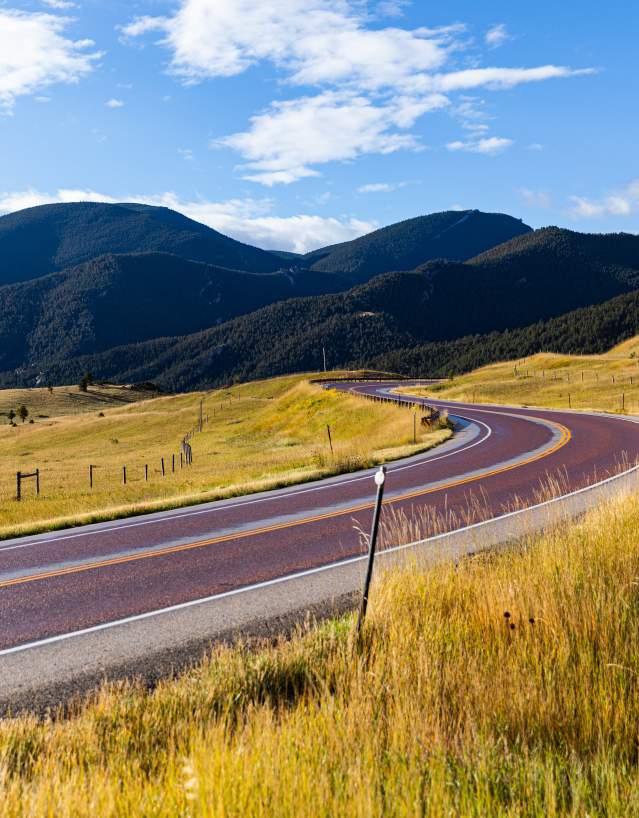
Hay viajes en los que el destino importa tanto como el camino, pero hay otros en los que la ruta termina convirtiéndose en la verdadera protagonista. Recorrer Wyoming y South Dakota en automóvil pertenece definitivamente a esta segunda categoría. Es uno de esos viajes en los que las distancias dejan de ser un inconveniente para convertirse en parte de la experiencia, porque cada kilómetro permite descubrir un paisaje diferente y, sobre todo, entrar lentamente en una América que parece haber quedado fuera del apuro de las grandes ciudades. El viaje comienza con la sensación de estar entrando en un territorio enorme, casi desproporcionado, donde las carreteras atraviesan extensas praderas y el horizonte parece alejarse cada vez que uno intenta alcanzarlo. Wyoming tiene esa particularidad: transmite una extraordinaria sensación de espacio. Hay ranchos dispersos, pequeñas localidades, largas rectas y un cielo que parece ocupar más lugar que la propia tierra. Es entonces cuando uno comprende que para conocer realmente esta región no alcanza con llegar a los lugares famosos; hay que manejar, detenerse, mirar y dejar que el paisaje vaya contando su propia historia.
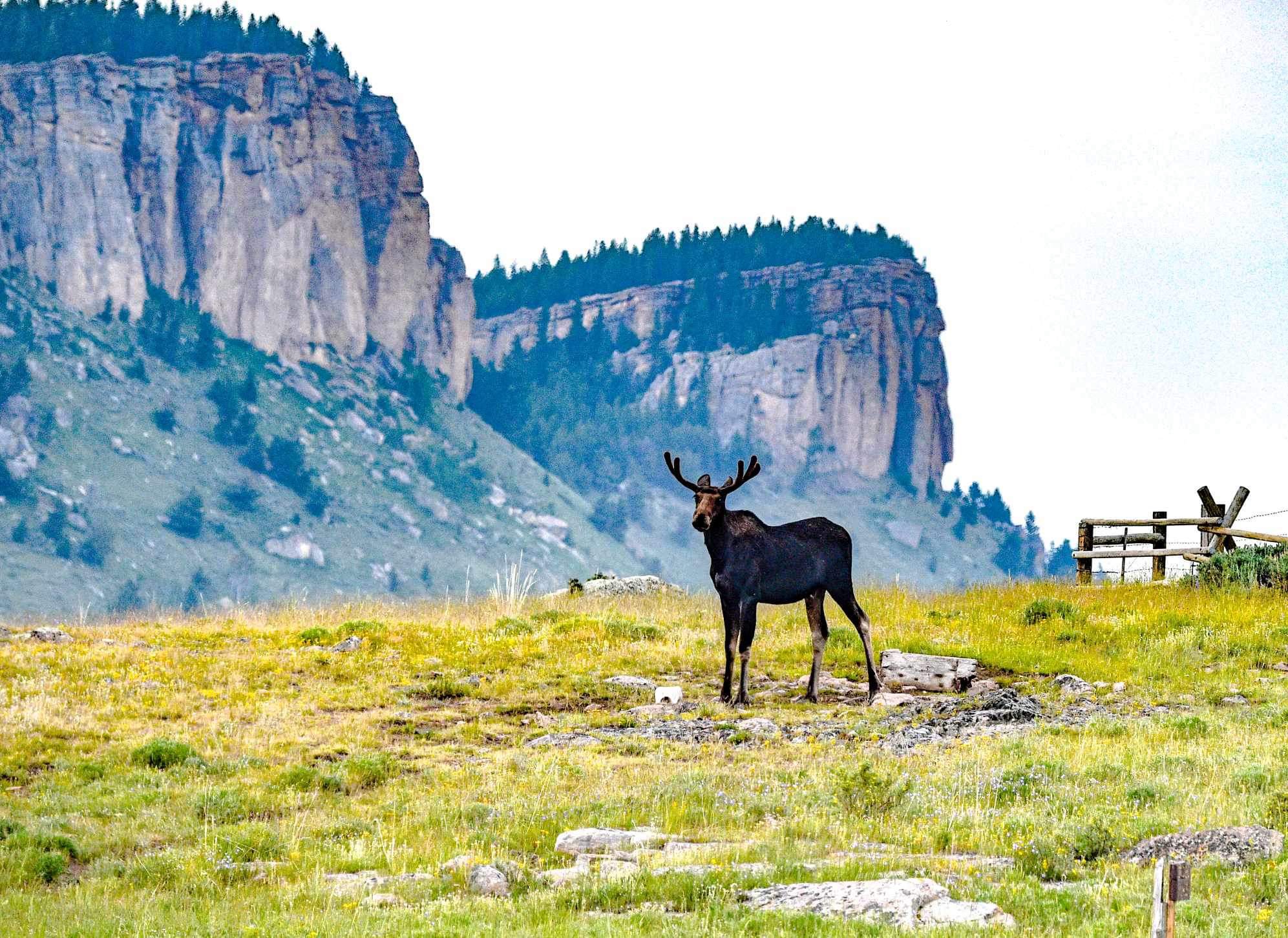
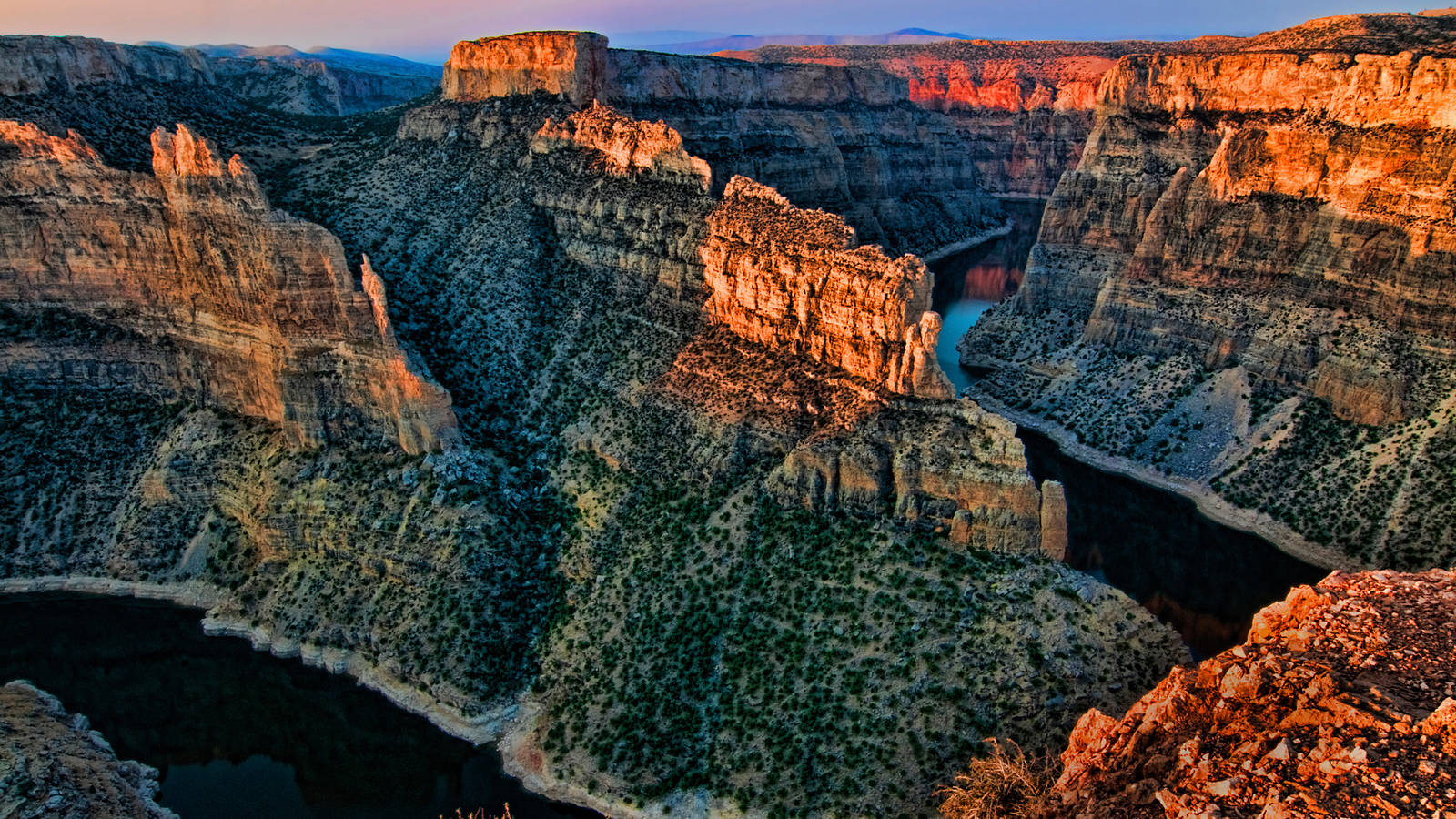
A medida que la ruta avanza, las montañas Bighorn comienzan a modificar lentamente el escenario. El terreno se vuelve más accidentado, aparecen los bosques y las curvas reemplazan a las largas rectas de la pradera. Es una de esas transformaciones que hacen que un road trip tenga sentido: no hay una frontera visible que indique que el paisaje cambió, sino que uno simplemente descubre, después de algunos kilómetros, que está atravesando un mundo completamente diferente. En esta zona aparece Bighorn Canyon, uno de esos lugares que pueden sorprender incluso a quienes llegan con un itinerario perfectamente estudiado. Las enormes paredes del cañón, el agua y la inmensidad del entorno crean un paisaje que invita a detener el automóvil y permanecer un rato sin hacer demasiado, simplemente contemplando. Y quizás esa sea una de las mejores maneras de recorrer Wyoming: sin intentar controlar cada minuto del viaje.
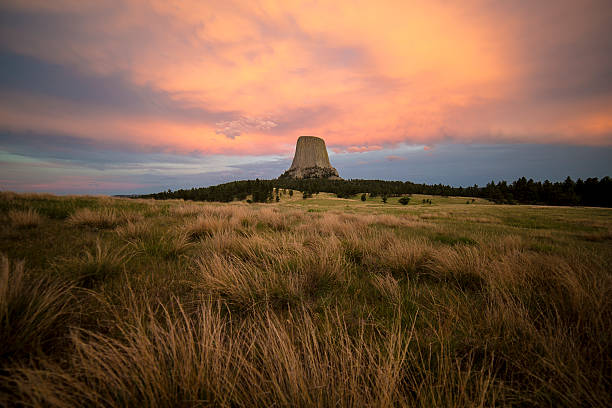
La ruta vuelve a abrirse después de atravesar las montañas y, poco a poco, aparece uno de los grandes símbolos naturales del estado: Devils Tower. La formación rocosa surge en medio de la pradera con una presencia casi irreal. Desde lejos parece imposible que una estructura semejante pueda encontrarse aislada en semejante paisaje, y cuando uno se acerca la sensación se vuelve todavía más intensa. Devils Tower fue el primer monumento nacional establecido en Estados Unidos y, aunque la explicación científica de su origen pertenece a la geología, su aspecto tiene algo de legendario. Las columnas de roca se elevan verticalmente sobre el terreno y producen una imagen difícil de olvidar, especialmente cuando el automóvil se detiene y uno contempla cómo aquella gigantesca formación domina todo el horizonte. Es también uno de esos momentos en los que el viaje deja de sentirse como un simple desplazamiento entre dos puntos y empieza a convertirse en una experiencia.
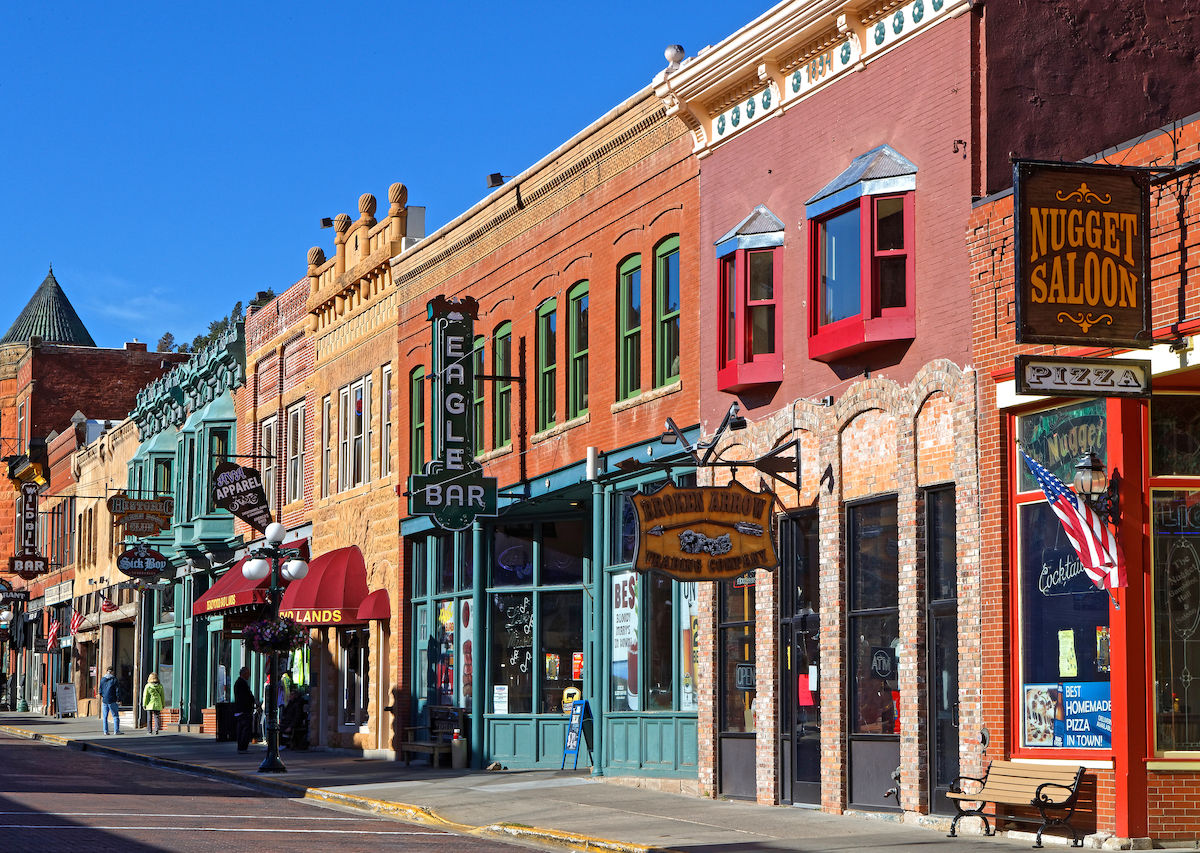
Después de Devils Tower, la ruta comienza a acercarse a South Dakota y el paisaje vuelve a transformarse. Las Black Hills aparecen como una inesperada concentración de montañas y bosques en medio de las grandes llanuras, y allí el viaje adquiere una personalidad diferente. La historia del Oeste está presente en los pequeños pueblos, en las construcciones de madera, en los viejos hoteles y en las calles que todavía conservan algo de aquella época en la que buscadores de oro, comerciantes, aventureros y personajes convertidos posteriormente en leyenda llegaron a estas tierras buscando fortuna. Deadwood es probablemente el mejor ejemplo de esa atmósfera. Caminar por sus calles permite imaginar el movimiento de aquella ciudad durante los años de la fiebre del oro y comprender hasta qué punto la historia del Oeste sigue formando parte de la identidad de esta región.
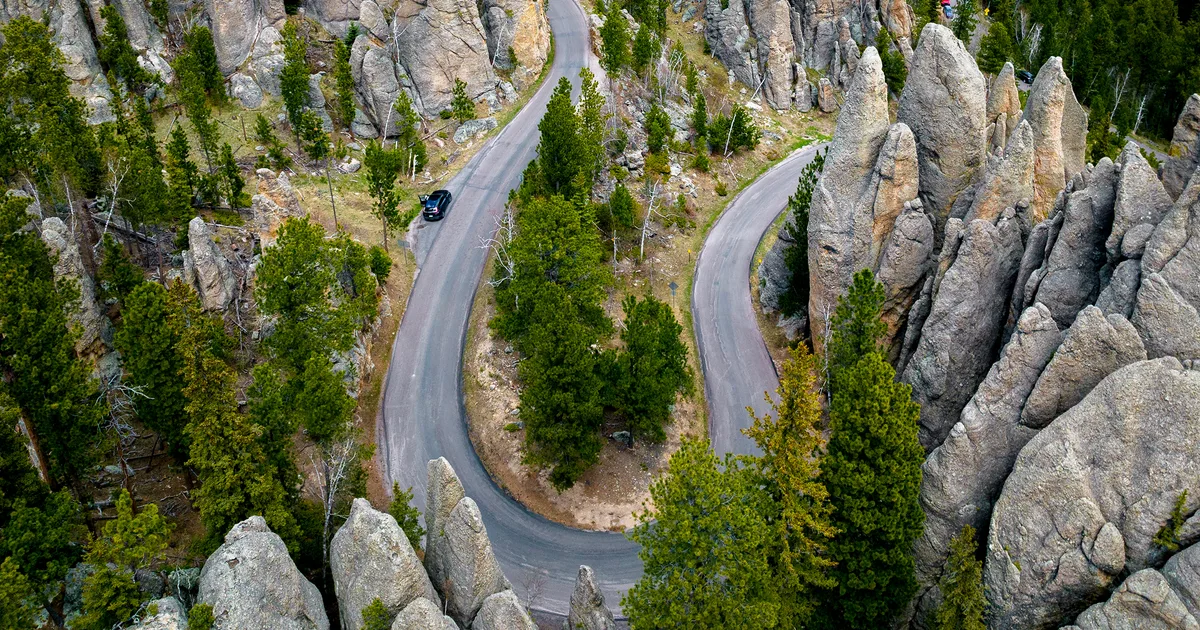
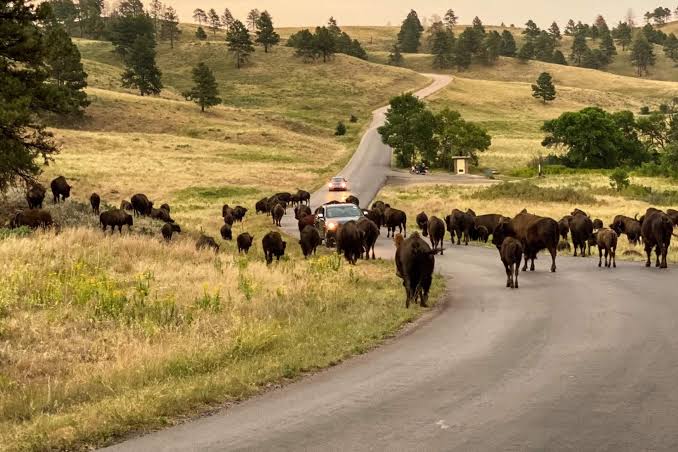
Sin embargo, las Black Hills no viven solamente de su pasado. También ofrecen algunas de las rutas escénicas más atractivas del recorrido, con caminos que atraviesan bosques, suben y bajan entre las montañas y aparecen inesperadamente frente a miradores desde los cuales la inmensidad de South Dakota vuelve a hacerse evidente. En este tramo del viaje aparece Custer State Park, un enorme espacio natural donde la presencia de bisontes forma parte del paisaje cotidiano. Encontrarse con una manada junto a la carretera puede obligar a detener completamente el automóvil y esperar pacientemente, pero nadie parece molestarse demasiado por ello. Al contrario, esos encuentros inesperados son precisamente los que terminan convirtiéndose en algunos de los recuerdos más fuertes del viaje.
Y entonces aparece Mount Rushmore. Después de tantos kilómetros de praderas, montañas y pequeños pueblos, encontrarse frente a los enormes rostros de George Washington, Thomas Jefferson, Theodore Roosevelt y Abraham Lincoln tallados en la montaña produce un efecto casi cinematográfico. Es una imagen conocida en todo el mundo, pero verla personalmente es otra cosa. La escala modifica completamente la percepción y convierte una fotografía tantas veces vista en una experiencia concreta. El monumento es, además, una buena muestra de cómo la historia, la política y el turismo se mezclan permanentemente en el paisaje estadounidense. Más allá de las distintas interpretaciones que pueda despertar, su presencia es imposible de ignorar y forma parte inseparable de cualquier recorrido por las Black Hills.
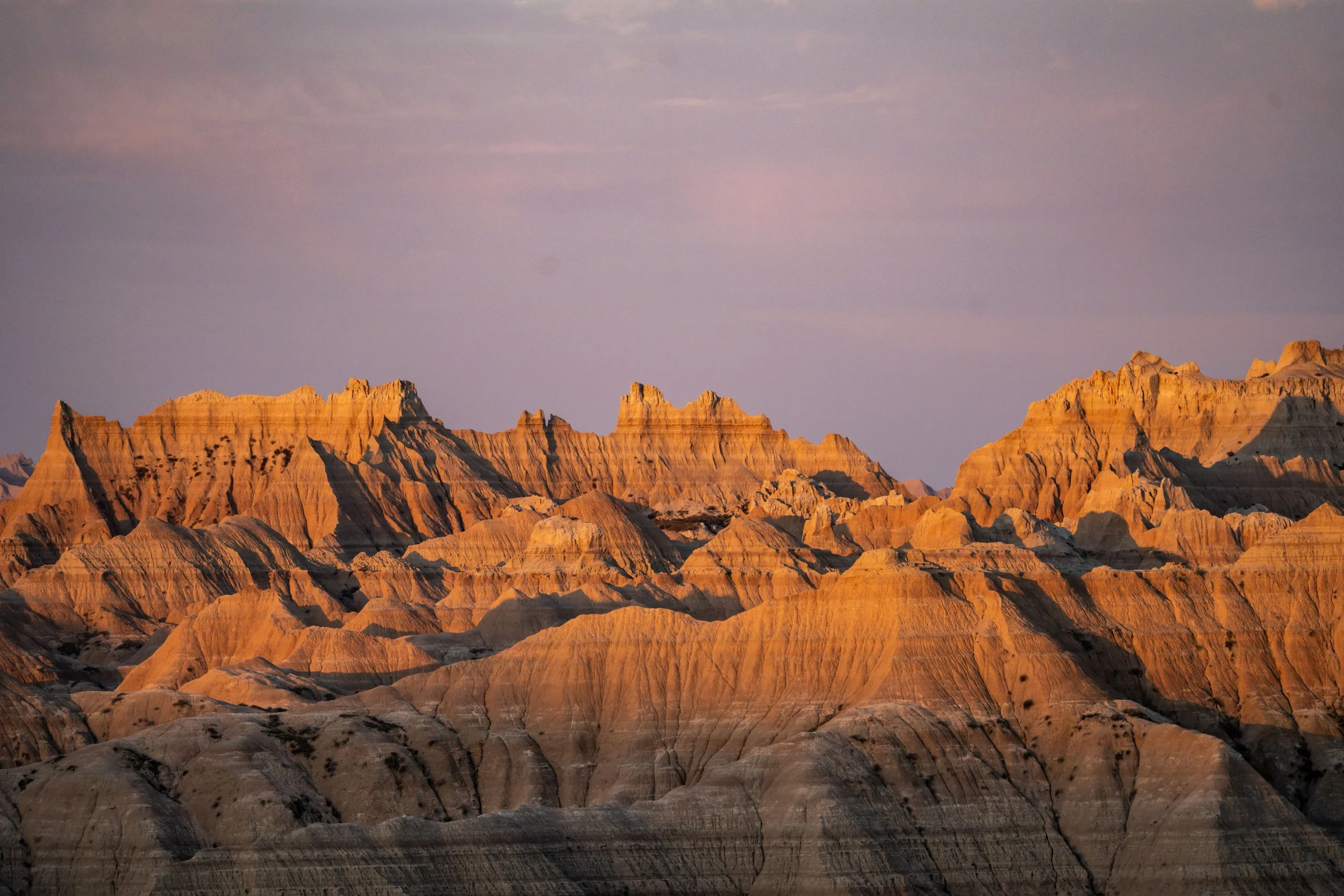
Pero el viaje todavía guarda uno de sus cambios de escenario más espectaculares. Dejando atrás las montañas, la carretera conduce hacia Badlands National Park y de pronto el paisaje parece pertenecer a otro planeta. Las verdes praderas se quiebran en enormes formaciones erosionadas, cañones y paredes que combinan diferentes tonalidades y crean un escenario completamente distinto al que se había encontrado apenas unas horas antes. La ruta escénica atraviesa ese paisaje permitiendo detenerse en diferentes miradores y observar cómo el viento y el agua fueron transformando lentamente la tierra. En algunos sectores aparecen bisontes, borregos cimarrones y perros de las praderas, recordando que este territorio no es solamente un espectáculo geológico sino también un ecosistema vivo.
Quizás sea precisamente en Badlands donde uno termina de comprender la esencia de este road trip. No se trata de una sucesión de atracciones que deben visitarse rápidamente para poder pasar a la siguiente. Se trata de un viaje en el que los espacios entre un lugar y otro tienen tanta importancia como los lugares mismos. Entre Wyoming y South Dakota existe una América de pequeños pueblos, estaciones de servicio, diners, ranchos, camionetas, moteles de carretera y largas extensiones abiertas en las que el teléfono puede dejar de ser importante durante un rato. Existe también la posibilidad de desviarse porque algo llamó la atención, detenerse frente a un paisaje que no estaba previsto o entrar en un café simplemente porque parecía interesante. Es una manera de viajar que requiere tiempo y cierta disposición a dejar que el camino tome algunas decisiones por uno.
Cuando finalmente aparecen las luces de Rapid City, o cuando la ruta continúa hacia otros destinos del Oeste americano, queda la sensación de haber atravesado algo más que dos estados. El viaje deja atrás kilómetros de carretera, pero también una sucesión de imágenes difíciles de ordenar: las montañas Bighorn, la silueta imposible de Devils Tower, las calles históricas de Deadwood, los bisontes de las Black Hills, los rostros de Mount Rushmore y las formaciones de Badlands. Todo queda unido por una misma línea: la carretera. Y esa es probablemente la mejor manera de entender un road trip por Wyoming y South Dakota: aquí la ruta no es simplemente el medio utilizado para llegar al destino. La ruta es, en buena medida, el destino.
English version
Wyoming and South Dakota: A Road Trip Through the Heart of the West
There are journeys in which the destination matters as much as the road, but there are others in which the road itself becomes the true protagonist. Driving through Wyoming and South Dakota definitely belongs to the second category. It is one of those road trips in which distance stops being an inconvenience and becomes part of the experience, because every mile reveals a different landscape and, above all, takes you slowly into an America that seems to exist beyond the rush of the big cities. The journey begins with the feeling of entering an immense territory, almost disproportionate in scale, where highways cross vast grasslands and the horizon seems to move farther away every time you try to reach it. Wyoming has that particular quality: it creates an extraordinary sense of space. There are scattered ranches, small communities, long stretches of open road and a sky that seems to occupy more room than the land itself. It is here that you begin to understand that truly experiencing this region is not simply about reaching famous landmarks; it is about driving, stopping, looking around and allowing the landscape to tell its own story.
As the road continues, the Bighorn Mountains gradually begin to transform the scenery. The terrain becomes more rugged, forests appear and winding roads replace the long straight stretches across the plains. It is one of those gradual changes that make a road trip so rewarding: there is no visible line telling you that the landscape has changed. Instead, after a few miles, you simply realize that you are moving through an entirely different world. This is where Bighorn Canyon appears, one of Wyoming’s great surprises. Its enormous cliffs, deep waters and vast surroundings create a landscape that almost demands that you pull over and stay for a while, doing very little other than taking it all in. And perhaps that is one of the best ways to experience Wyoming: without trying to control every minute of the journey.
The road eventually opens up again and leads toward one of the state’s great natural landmarks: Devils Tower. The rock formation rises from the middle of the prairie with an almost unreal presence. From a distance, it seems impossible that such a structure could stand isolated in such an enormous landscape, and the feeling becomes even stronger as you get closer. Devils Tower was the first national monument established in the United States and, although its origin is a matter of geology, there is something almost legendary about its appearance. Its columns of rock rise vertically above the surrounding land, creating an unforgettable image, particularly when you stop the car and realize how completely the formation dominates the horizon. It is also one of those moments when the journey stops feeling like a simple trip between two points and begins to become an experience in its own right.
After Devils Tower, the road begins to approach South Dakota and the landscape changes once again. The Black Hills appear as an unexpected concentration of mountains and forests surrounded by the vast Great Plains, giving the journey an entirely different character. The history of the American West is everywhere in the small towns, wooden buildings, historic hotels and streets that still evoke the era when gold seekers, merchants, adventurers and characters who would later become legends arrived in these lands looking for fortune. Deadwood is perhaps the clearest example of that atmosphere. Walking through its streets makes it easy to imagine the activity of the town during the gold-rush years and to understand how deeply the history of the Old West remains embedded in the identity of this region.
Yet the Black Hills are about much more than history. They offer some of the most enjoyable scenic drives of the entire journey, with roads winding through forests, climbing and descending through the hills and suddenly opening onto viewpoints where the immense scale of South Dakota becomes visible once again. This is where Custer State Park enters the story, a vast natural area where bison are an integral part of the landscape. Coming across a herd standing beside or even across the road can bring traffic to a complete stop, but nobody seems particularly bothered by it. Quite the opposite: these unexpected encounters are precisely the moments that often become the strongest memories of a road trip.
And then comes Mount Rushmore. After so many miles of prairies, mountains and small towns, standing in front of the enormous faces of George Washington, Thomas Jefferson, Theodore Roosevelt and Abraham Lincoln carved into the mountain has an almost cinematic quality. It is an image known throughout the world, but seeing it in person is something entirely different. Scale changes the experience, transforming a photograph you may have seen countless times into something tangible. The monument is also a powerful example of the way history, politics and tourism constantly intersect in the American landscape. Whatever interpretation it may inspire, its presence is impossible to ignore and it remains an inseparable part of any journey through the Black Hills.
But the road still has one of its most dramatic changes of scenery ahead. Leaving the mountains behind, the highway leads toward Badlands National Park and suddenly the landscape seems to belong to another planet. The green plains break apart into sharply eroded formations, deep canyons and ridges displaying different shades and textures, creating a setting completely unlike anything encountered only a short distance earlier. The scenic road cuts through this extraordinary terrain, offering opportunities to stop at overlooks and see how wind and water have slowly shaped the land. Bison, bighorn sheep and prairie dogs can also be found in the area, reminding visitors that this is not simply a spectacular geological setting but a living ecosystem.
Perhaps it is in the Badlands that the true essence of this road trip finally becomes clear. This is not a journey made by quickly checking attractions off a list before moving on to the next one. The spaces between destinations matter just as much as the destinations themselves. Between Wyoming and South Dakota lies an America of small towns, gas stations, diners, ranches, pickup trucks, roadside motels and enormous stretches of open land where the phone can become unimportant for a while. There is also the freedom to take an unexpected turn because something caught your eye, stop beside a landscape that was never part of the plan or walk into a café simply because it looked interesting. It is a way of traveling that requires time and a willingness to let the road make some of the decisions for you.
When the lights of Rapid City finally appear, or when the road continues toward other destinations in the American West, there is a feeling that you have crossed much more than two states. The journey has left behind hundreds of miles of highway, but also a succession of images that are difficult to separate from one another: the Bighorn Mountains, the impossible silhouette of Devils Tower, the historic streets of Deadwood, the bison of the Black Hills, the faces of Mount Rushmore and the extraordinary formations of the Badlands. All of them are connected by one thing: the road. And that may be the best way to understand a road trip through Wyoming and South Dakota. Here, the road is not simply the means of reaching the destination.
The road is the destination.